№42

The Question Is

Docker, Java, Signals and Pid 1

2019-02-20 10 min read Container Technology Ronny Trommer

Running a Java application in a container seems to be very easy. The devil is in the details and I want to shed some light on the PID 1 problem when you run Java applications in containers. Theoretical, processes in containers should not have state so you just don’t care, but reality is different.

Signals are used to message running process to behave in certain ways. A common case is to terminate a process nicely sending a SIGTERM to the process identified by the process id using the tool ps. People can implement logic shutting down an application gracefully. When you issue the command kill <pid> you send a SIGTERM to a process. We have other signals you can use, especially when application provide terminals. Hitting CTRL + C sends SIGINT to the terminal process. Some signals are quite out of time, the signal to hangup SIGHUP comes from terminal applications. It is often used nowadays telling a running process to re-read configurations.
Continue reading

SSL and Java

2018-11-26 3 min read Tutorial Technology Ronny Trommer

Running applications with a current Java is not a big deal thanks Let’s Encrypt. This article describes what happens if you want to authenticate your OpenNMS against LDAP using SSL with a self-certified certificate.

First of all I assume you have confiured verything so you can authenticate against LDAP in plaintext and you got a role mapping as you wanted it. If not you can have a look here.

So the naive approach would be, just changing the line in your activeDirectory.xml from

Continue reading

Everyone can change it and why you shouldn't

2018-09-27 3 min read Open Source Technology Ronny Trommer

Open-source software is great. If there is something you don’t like, you can at least - try to change it. A lot of open-source software out there is not primarily used by private people. There are many companies who provide professional services around open-source software. Some of them try to enhance the appearance with custom User Interfaces, their company logo to fit their own Corporate Identity. There are several motivations, mostly they want to be distinguished on the marked or need some easy to maintain little customization which allows their sales guys easier to sell a project and not using the software from the community projects website. How hard could it be to make something pretty, right?

Continue reading

Guidance to Survive Monitoring

2018-08-08 5 min read Technology Open Source Ronny Trommer

While working in the monitoring field for a long time, here are some rules I try to follow when requirements go awry.

Rule #1: Only create an alert when human interaction is required

When you setup a monitoring, it tends to get noisy very quickly. The problem is, people want to know everything and want to monitor everything. You tend to build a system which sends you a lot of alarms and you will get alarm fatique. To get most out of your monitoring solution, you have to always keep in mind Rule #1. When you alert for something, ask yourself is it really necessary to wake some one up in the middle of the night. There is nothing more horrible than waking someone up and it is a false alert.

Continue reading

He's dead, Jim

2018-07-30 5 min read Technology Ronny Trommer

If you operate networks there is a big chance you had to deal with SNMP - the Simple Network Management Protocol. If you ever wondered where it came from, it started with a big bang.

On October 27, 1980, there was an unusual occurrence on the ARPANET. For a period of several hours, the network appeared to be unusable, due to what was later diagnosed as a high priority software process running out of control. Network-wide disturbances are extremely unusual in the ARPANET (none has occurred in several years), and as a result, many people have expressed interest in learning more about the etiology of this particular incident.

Continue reading

Hipster vs. Microsoft

2018-06-07 3 min read Technology Open Source Ronny Trommer

This week was great, Microsoft bought GitHub! All the Hipsters went crazy and a lot of open-source people move now their repos to GitLab. There is even a Hashtag #movingtogitlab floating around.

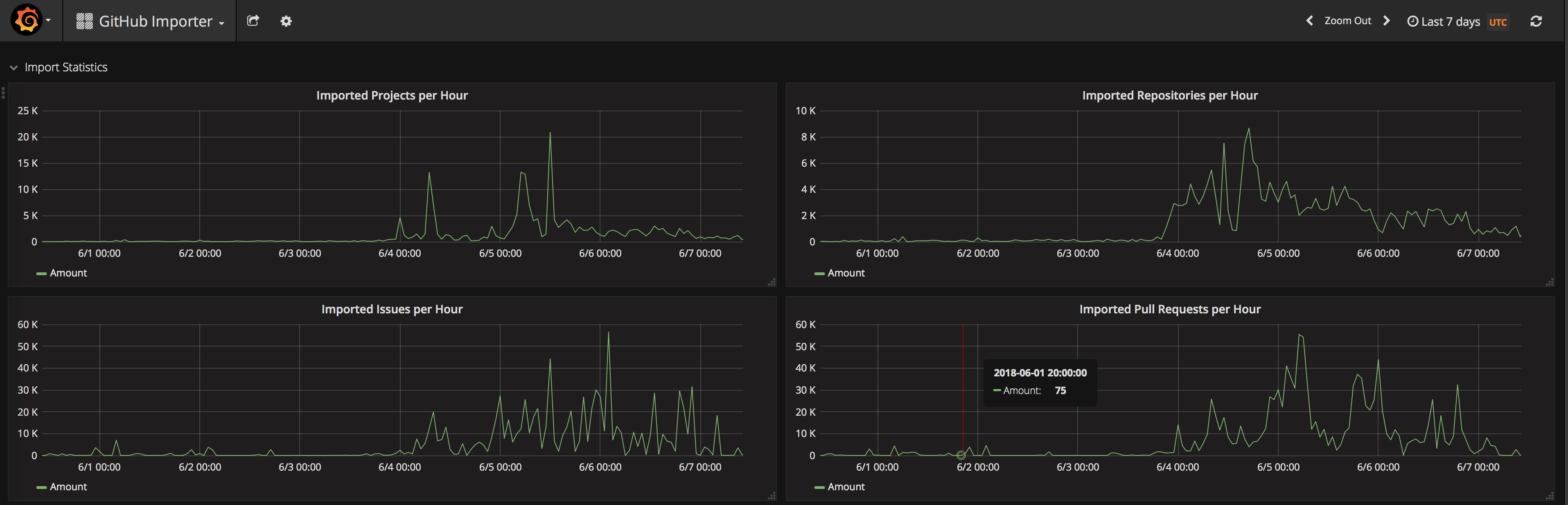
GitLab importer statistics

The GitLab importer showed significant peaks when the news broke out. What the hell happened?

GitHub is the new SourceForge

GitHub was cool, it made Git to shine. GitHub was the platform to collaborate on software development in public and helped to make Git the de-facto standard as a free and decentralized version control system. It helped to make development workflows transparent for everyone. The interface was quick, simple, well accepted and it was not plastered with popups and advertisements. It was started in 2007 by the company GitHub, Inc. in San Francisco. In a very short amount of time it was so well accepted, it killed SourceForge and Google Code. It was the prototype of “disrupting” the way how people collaborate in software development, especially in open-source projects.

Continue reading

Monitoring DevOps and the Status Quo

2017-03-09 5 min read Technology Ronny Trommer

As most of us noticed a few companies changed our perspective how to develop software and deploy them as a service. There are quite a few changes between selling every year a box with 10 CD’s and develop and deliver your software as a service. This article is a collection of thoughts and ideas I had and wanted to be written.

Who cares about a version number?

User give a shit about version numbers anymore, all what matters needs to be focused on the user. Great user experience, functionality and a good “Effort-to-Outcome” ratio to solve your problems will make your software successful.

Continue reading
The YouTube player can not be loaded with disabled JavaScript.
The following video is embedded here:
https://youtube.com/watch?v=N3pPjYxLvkY

Docker and parallel builds

2016-07-09 1 min read Technology CICD Ronny Trommer

I was listening to an interesting talk from Laura Frank from Codeship. In case you build or maintain a Continuous {Integration, Delivery} environment this definitely worth watching and they describe how they used LXC and now Docker to build their CI/CD infrastructure.

TL;DR

Interesting to me, the description in the YAML file reminded me quickly on a course I needed to pass during my study in parallel computing. The exam had one section where you had to describe parallel and sequential processes with some high level constructs. You had to describe a given time sequence graph for processes on n processors with the primitives BEGIN/END for sequential parts and COBEGIN/COEND for parallel processes.

Open-source Experience

2014-11-22 3 min read Technology Open Source Ronny Trommer

I spend a lot of time in the OpenNMS project and I love to work in free software and the workflows around it. We moved with our project from SourceForge to GitHub a few years ago and I think it was the right decision. There are now some established workflows in this ecosystem and they tear down borders between different open-source projects and here is an example of it.

I develop with IntelliJ IDEA and spend currently some time working in documentation of OpenNMS. We have migrated from Docbook XML format to AsciiDoc and started with the help of a few brave community volunteers a new documentation environment. I’ve found a plugin for IDEA which renders AsciiDoc and gave it a try to have a better workflow working on documentation and navigating through source code in just one program.

Continue reading
Older posts Newer posts